LiNT LiNT provides an estimate of text difficulty based on a readability study in which text features are linked to levels of text comprehension. […] Read more
AnnCor and Multiword Expression Identifier The central goal of this project is to create a Multiword (e.g. De plaat poetsen.) Expression Identifier for Dutch (MWEIDD) and enrich various Dutch text corpora with annotations based on this Identifier. […] Read more
Visual pattern recognition and (meta) data extraction The project created a workbench that can be used for computationally analyzing large datasets of visual material. It is designed to cater to the needs of researchers in a range of studies who work with digitized visual material. […] Read more
Footprinter, a tool for the analysis of the Oceans of Light corpus Footprinter is designed to discover the Qur’an citations in this corpus of legal texts. […] Read more
Historical Newspapers During the Historical Newspapers project, a large corpora of newspaper articles was aggregated, along with tools for sentiment analysis and spatial analysis. […] Read more
Data Scan @ Home In a time of Covid-19 we had to develop alternative ways to facilitate data walks so we developed the Data Scan @ Home. This interactive PDF facilitates observation and reflection on data, encourages relating personal experiences to public debate and operates as a starting point for discussion with others. Download Data Scan @ Home […] Read more
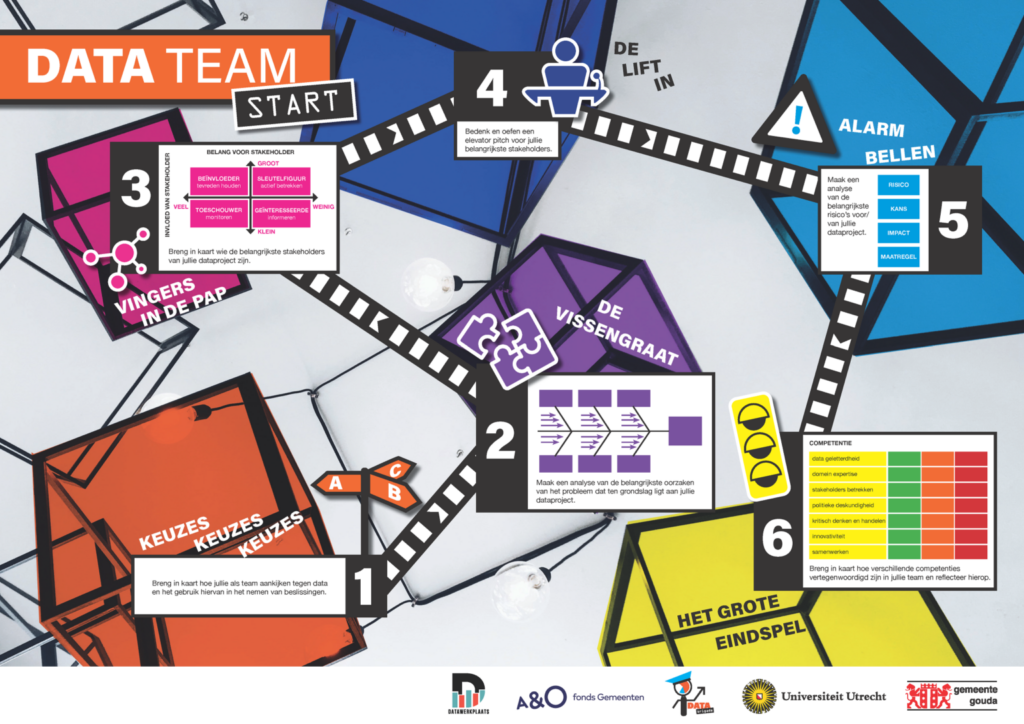
Data Team Start A tool that (novice) data project teams can use to conduct an inspection to obtain an accurate survey of their collaboration. […] Read more
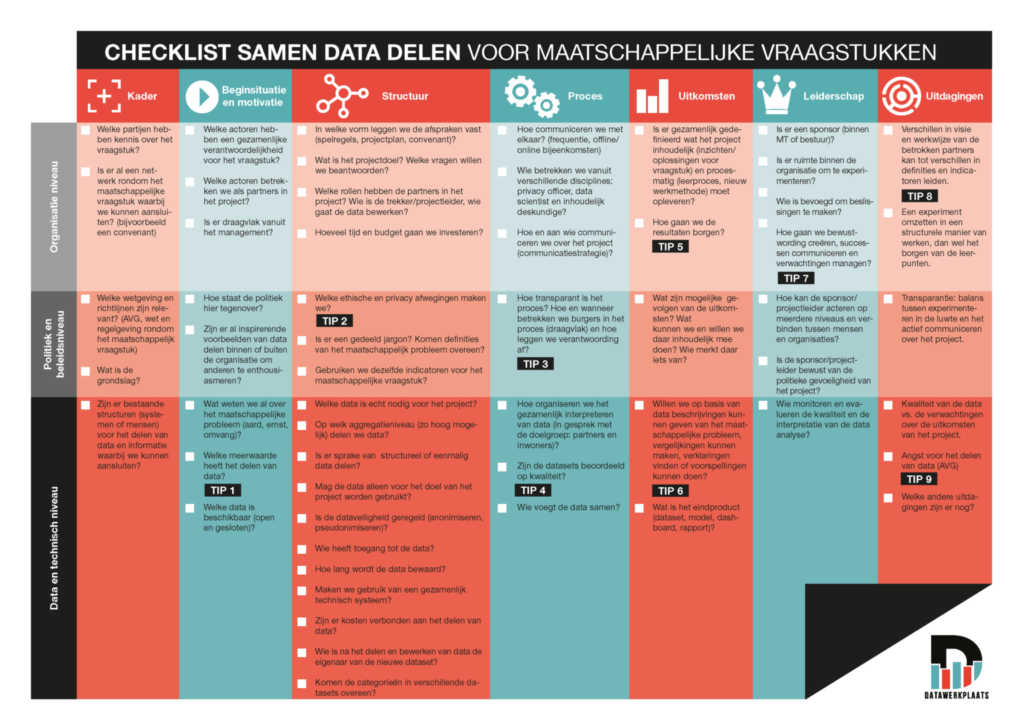
Sharing Data Together The ‘Sharing data together’ checklist offers guidance to organisations wishing to share data responsibly. […] Read more
Dashboards with value for the entire organisation (Concept) Helps organisations give meaning to dashboards by facilitating a discussion based on given propositions. […] Read more
Data Ethics Awareness Test (DEAT) Survey to measure moral sensitivity to data practices within an organisation. […] Read more
Bots as Digital Infrapunctures This module explores what role bots can have as infrastructural stress relievers, by actively engaging with the norms and values inscribed into computational tools and infrastructures. […] Read more
Meaningful digital (and hybrid) collaboration This tool helps teams to shape their digital cooperation in a meaningful way during and after the COVID-19 pandemic. […] Read more
The Digital Advisor (Concept) Tool to help people’s representatives within a municipality to make a value judgement on a data-related proposal and to learn to ask critical questions about such proposals. […] Read more
Semi-Automatic Analysis of Spontaneous Language (SASTA) Clinical linguists can use SASTA to automate the process of labeling language in patient transcripts with high accuracy. […] Read more
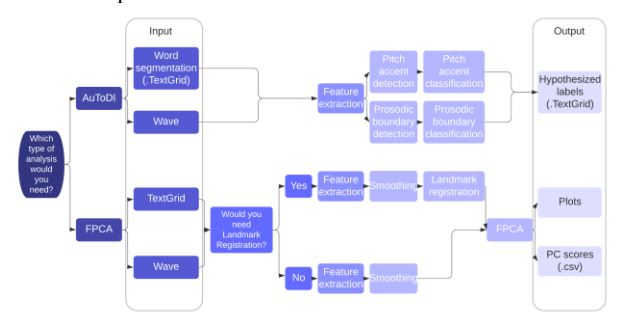
Automatic Analysis of Speech Prosody (AASP) AASP enables scientists to classify speech prosody automatically. It can generate tone labels for Dutch intonation, and finds descriptors for speech melody. […] Read more
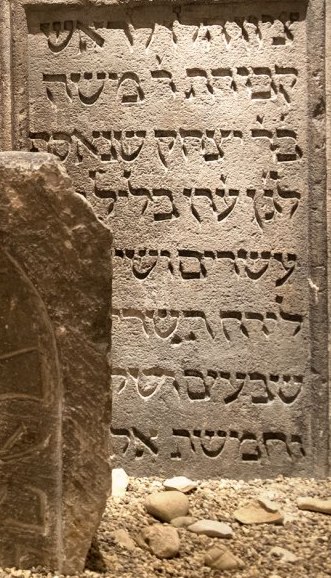
PEACE – Portal of Jewish Funerary Culture The PEACE portal provides a broad epigraphic search into Jewish funerary inscriptions from antiquity to the twentieth century. […] Read more
Upgrade of the Medieval Memoria Online (MeMO) Database MeMO provides a database of items in the medieval commemoration of the dead in the area that is currently the Netherlands, until 1580. […] Read more
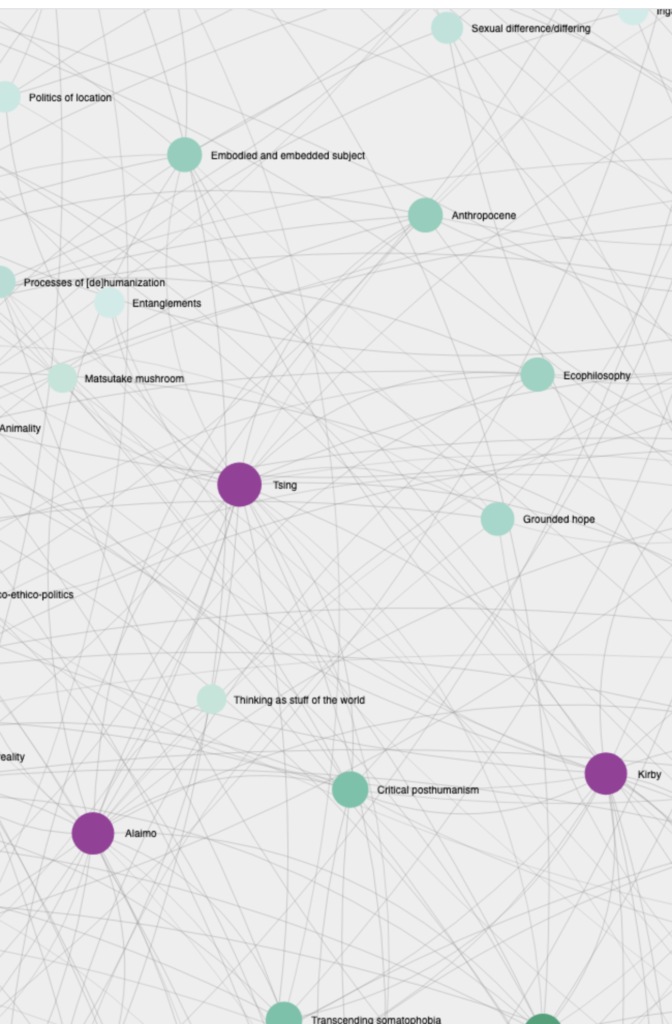
Digital cartography of new materialism With this digital critical cartography, a creative representation of Evelien Geerts’ situated findings concerning contemporary new materialist thought is depicted. […] Read more
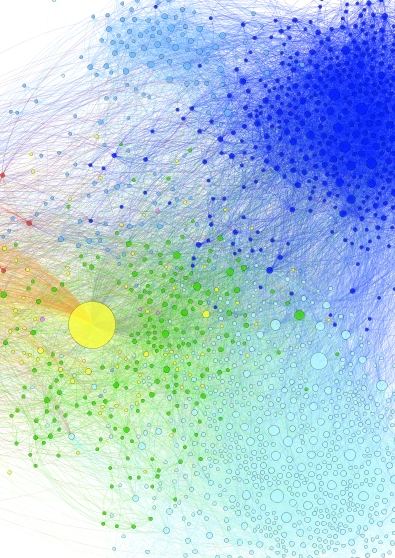
Fieldnotes Gephi Plugin Fieldnotes logs the settings that were deployed for individual visualizations, thus making network visualization in Gephi accountable. […] Read more
CEMROL: Collecting Epistolary Metadata of the Republic of Letters A crowdsourcing platform to harvest the metadata of letters from printed editions of early modern letters. […] Read more