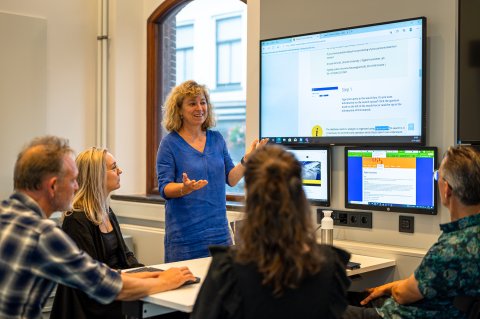
From 2023 the Digital Humanities Walk-in Hours move to Thursdays 29/11/2022 From January 2023, the Digital Humanities Walk-in Hours will shift from Wednesdays to Thursdays. The time from 14:00 to 15:00 hrs will remain the same. All humanities staff and students are welcome to visit the Digital Humanities Walk-in Hours for face-to-face advice about all kinds of questions related to research data, digital humanities software, Python, statistics and […] Read more
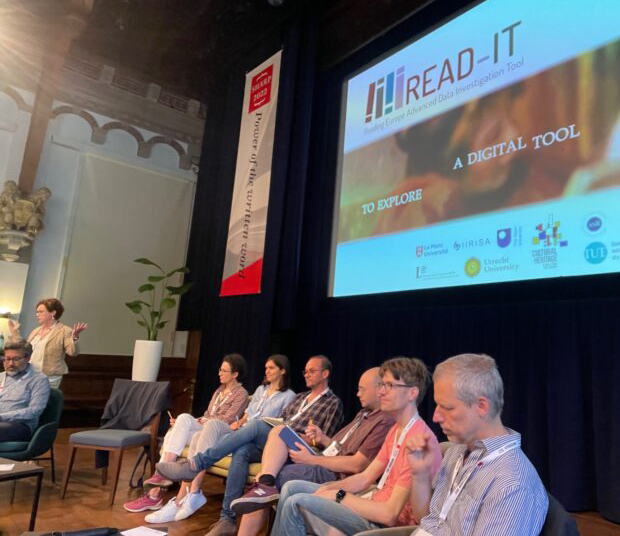
Digital Humanities Lab presents READ-IT tool with international partners 27/09/2022 At the SHARP Conference 2022, the Digital Humanities Lab (DHLab) recently presented the results of the international READ-IT project. With the Horizon2020 grant of 250,000 euros the DHLab built an advanced interface for this project. READ-IT (Reading Europe Advanced Investigation Tool) is a large-scale study of reading culture in Europe from the 18th century to […] Read more
Digital Humanities Lab launches AuChAnn 24/08/2022 The Digital Humanities Lab (DHLab) recently launched AuChAnn, the Automatic CHAT Annotation tool. AuChAnn is a python library that can read a Dutch transcript and interpretation pair and generate a fitting CHAT annotation. Scientific developers Sheean Spoel and Mees van Stiphout of the DHLab developed AuChAnn in collaboration with Frank Wijnen, Professor of psycholinguistics at […] Read more
Automatic CHAT Annotation Tool (AuChAnn) AuChAnn – Automatic CHAT Annotation tool – is a python library that can read a Dutch transcript and interpretation pair and generate a fitting CHAT annotation. […] Read more
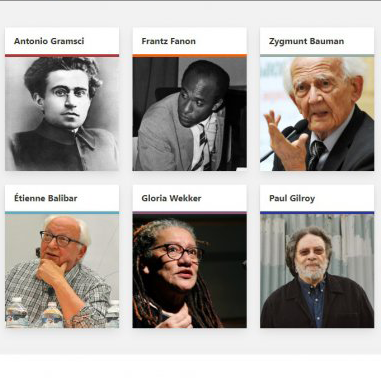
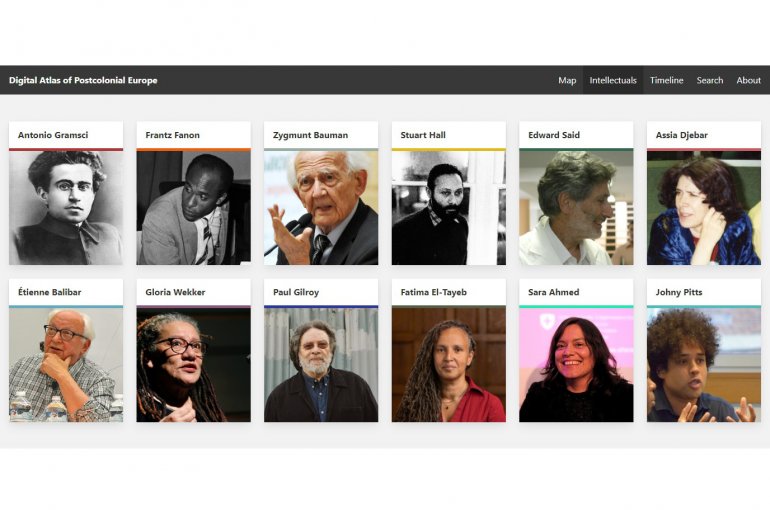
Digital Atlas of Postcolonial Europe The Digital Atlas of Postcolonial Europe project visualizes the connections of the lives, works, and legacies of prominent postcolonial intellectuals in Europe. […] Read more
Open Science grant awarded to Digital Humanities Lab 07/07/2022 The scientific developers of the Utrecht Digital Humanities Lab (DHLab) have been awarded a grant from the Open Science Fund. The main objective of the rewarded project is to make the past and future research software of DHLab as FAIR (Findable, Accessible, Interoperable and Reusable) as possible. The Open Science Fund is an opportunity for Utrecht University and […] Read more
Department of Media and Culture Studies and Digital Humanities Lab launch of Digital Atlas of Europe: postcolonial intellectuals 07/07/2022 In collaboration with the Digital Humanities Lab, Professor of Media, Gender and Postcolonial Studies Sandra Ponzanesi and research assistant Julia de Lange launched the Digital Atlas of Postcolonial Europe: Postcolonial Intellectuals. The Digital Atlas of Europe aims to visualise the connections of postcolonial intellectuals across time and space, within and beyond Europe. It offers a symbolic selection of major postcolonial figures […] Read more
Ontwikkelaar Digital Humanities gezocht bij Utrecht Centre for Digital Humanities Het Centre for Digital Humanities (CDH) zoekt een programmeur/ontwikkelaar voor de periode van een jaar (0,8-1,0 fte) die meewerkt aan diverse projecten. Binnen de geesteswetenschappen wordt steeds meer gebruik gemaakt van gedigitaliseerde data en tools om deze data te bewerken en analyseren. Om onderzoek en onderwijs op dit gebied te ondersteunen is aan de faculteit […] Read more
Map your hero(ine) Map your hero(ine) is a small-scale project for which the Digital Humanities Lab developed a web application with a database, online survey and visualizations. […] Read more
Walk-in consultation hour DH Lab cancelled 25/11/2021 Due to the new Corona measures, we have decided to cancel the walk-in consultation hour on Wednesday from 14-15.00h at the Digital Humanities Lab (DH Lab). It remains possible to set up an online no-obligation consultation at a day and time that suits you. The DH Lab offers these consultations to the staff of the Faculty of Humanities […] Read more
Digital Opinions on Translated Literature (DIOPTRA-L) The DIOPTRA-L corpus is a database with 280.000 user-generated reviews of more than 150 books that have been translated into 8 languages. […] Read more
The Digital Humanities Lab develops digital toolset for major European research project ‘People and Parliament’ 22/09/2021 The Utrecht Digital Humanities Lab will collaborate with the University of Jyväskylä (Finland) on the political-historical research project ‘People and Parliament’. This collaboration between software developers and historians enables groundbreaking research into parliamentary data. ‘People and Parliament’ is an ambitious project. The research focuses on the use of political language in the national parliaments of […] Read more
The Glossary Project – Graphical randomizer for glossary concepts A graphical randomizer for glossary concepts. The tool is used to spark curiosity and conversationvarious glossart concepts. […] Read more
LiNT LiNT provides an estimate of text difficulty based on a readability study in which text features are linked to levels of text comprehension. […] Read more
Semi-Automatic Analysis of Spontaneous Language (SASTA) Clinical linguists can use SASTA to automate the process of labeling language in patient transcripts with high accuracy. […] Read more
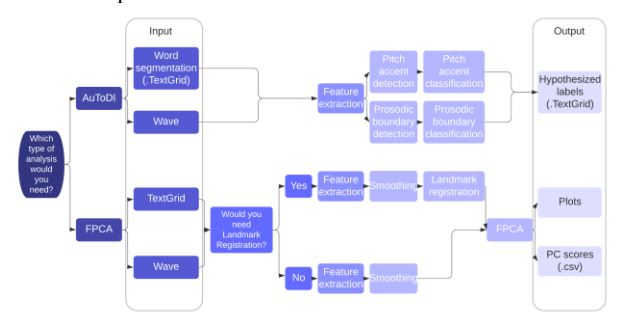
Automatic Analysis of Speech Prosody (AASP) AASP enables scientists to classify speech prosody automatically. It can generate tone labels for Dutch intonation, and finds descriptors for speech melody. […] Read more
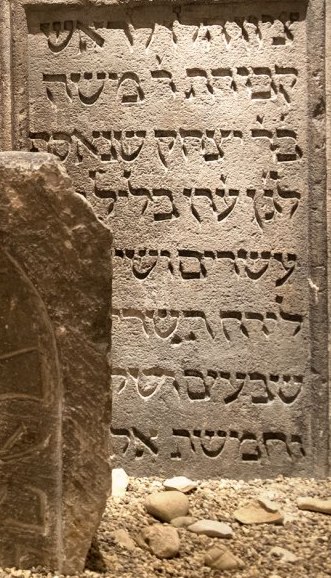
PEACE – Portal of Jewish Funerary Culture The PEACE portal provides a broad epigraphic search into Jewish funerary inscriptions from antiquity to the twentieth century. […] Read more
Upgrade of the Medieval Memoria Online (MeMO) Database MeMO provides a database of items in the medieval commemoration of the dead in the area that is currently the Netherlands, until 1580. […] Read more
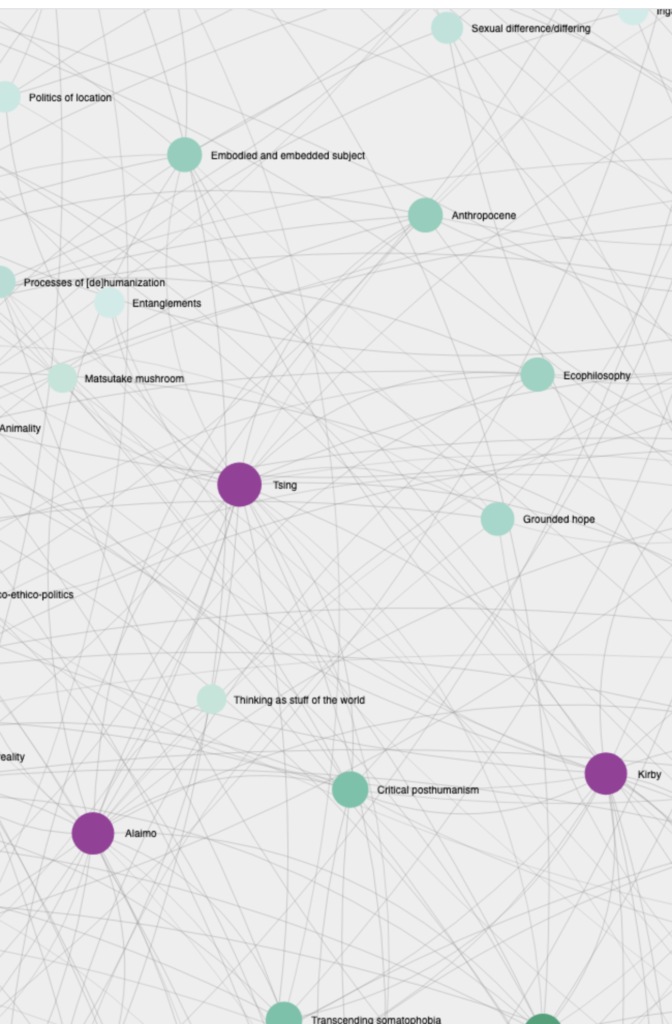
Digital cartography of new materialism With this digital critical cartography, a creative representation of Evelien Geerts’ situated findings concerning contemporary new materialist thought is depicted. […] Read more
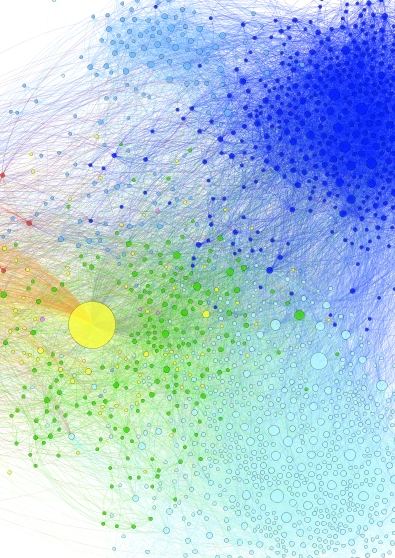
Fieldnotes Gephi Plugin Fieldnotes logs the settings that were deployed for individual visualizations, thus making network visualization in Gephi accountable. […] Read more