
The Digital Humanities Dialogue for Students
Have you ever wondered how you can make digital research methods useful for your studies? Or are you already using digital methods and are you curious about the experiences of others? At The Digital Humanities Dialogue, fellow students and researchers who have used digital methods for their projects will share their experiences. There will be coffee, cookies, and plenty of room for discussion!
There are many digital methods out there that can enrich research in the humanities. Whether it’s for a thesis, another project, or even a small assignment, digital methods can be great tools to unlock new avenues for your research.
At the same time, digital methods can feel like a daunting topic to pick up: they seem complicated and inaccessible, or simply difficult to imagine how to use. Our speakers will demonstrate how they use digital methods in their research projects in the humanities.
The event offers plenty of room for discussions, so that you can exchange ideas with other students and inspire each other to try out new methods.
Speakers
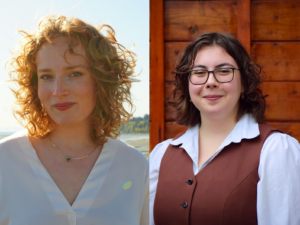
Aoife Buckley (MA) & Sophia Kusch (MA) – Modern and Contemporary History
‘What happens when political authority becomes the subject of online erotic parody? The paper presented uses quantitative text analysis to explore thousands of fanfiction works about Donald Trump, showing how digital communities transform political power into satire. We suggest that such fanfiction operates as a form of grassroots political critique that destabilizes hegemonic masculinity and reimagines the presidency through humor, intimacy, and excess. In doing so, we rethink the archive not as a static repository of knowledge, but as a participatory space where meaning is collectively produced and contested.’
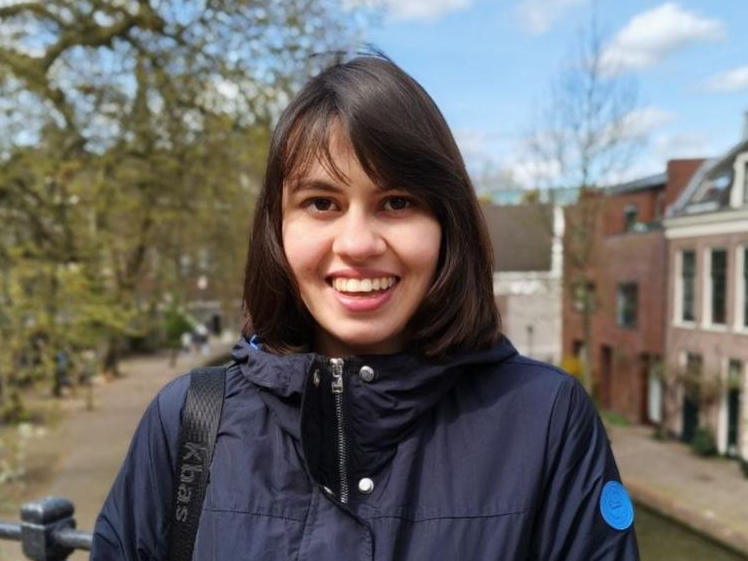
Alissa Vavinova (MA) – Linguistics
‘To what extent can a persona-prompted Large Language Model align with domain-specific linguistic profiles in realistic online contexts? Using principal component analysis and linguistic feature extraction, we compared comments generated from OCEAN-based LLM personas and a neutral agent against real human Reddit comments. The results show that while LLM personas did adapt to different online domains, they consistently occupied more formal, lexically dense positions than human comments, meaning their stylistic alignment remains imperfect. These findings demonstrate how computational methods can evaluate the authenticity of AI-generated language, pointing toward more nuanced and reliable AI communication.’
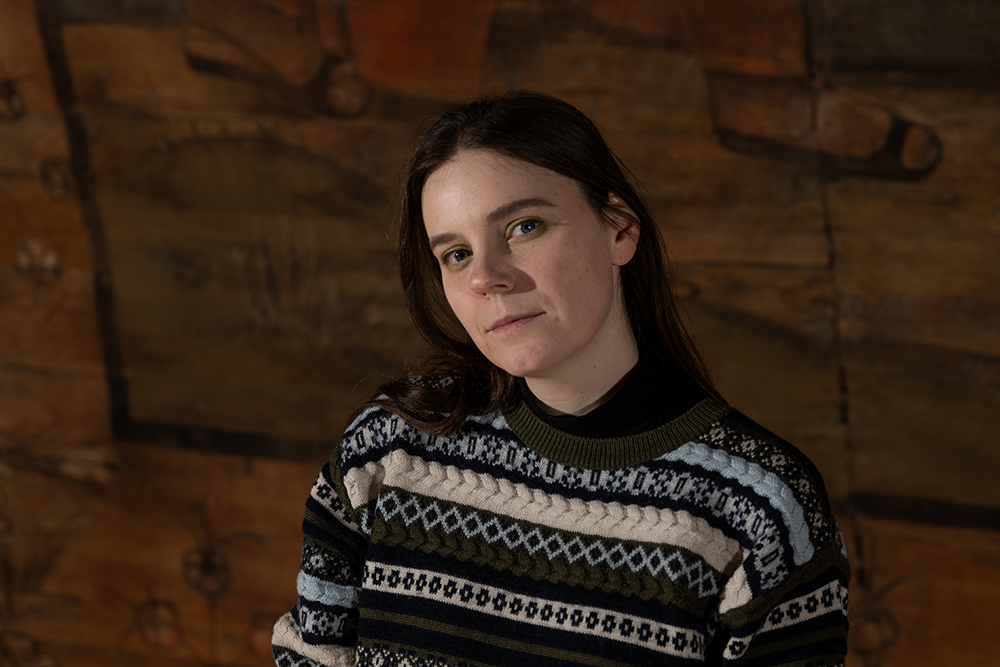
Christien Schrover (PhD) – History and Art History
The Digital Altarpiece: Digital Thee-Dimensional Reconstruction Techniques and the Mary Altarpiece (1475-1477)
How can researchers work with objects that have been taken apart? It is often difficult to physically reunite such an object, especially if fragments have ended up in different locations. In those cases, digital reconstruction techniques can help to understand the object before it became fragmented.
My research looks at such digital reconstruction techniques as a way to gain new knowledge about artworks. In specific, I am looking at the large late medieval Mary Altarpiece (1475-1477) from Utrecht, carved by the sculptor Adriaen van Wesel. Although it survived the Beeldenstorm intact, it was taken apart in the 19th century. Currently, some 10-13 different fragments of this artwork are known, spread out over different collections. By creating three-dimensional models of the existing fragments of the object, and by bringing these models together digitally, I am working on a digital visualization of the altarpiece before it was taken apart.
Sign up
The event is free, but please register via the form below.